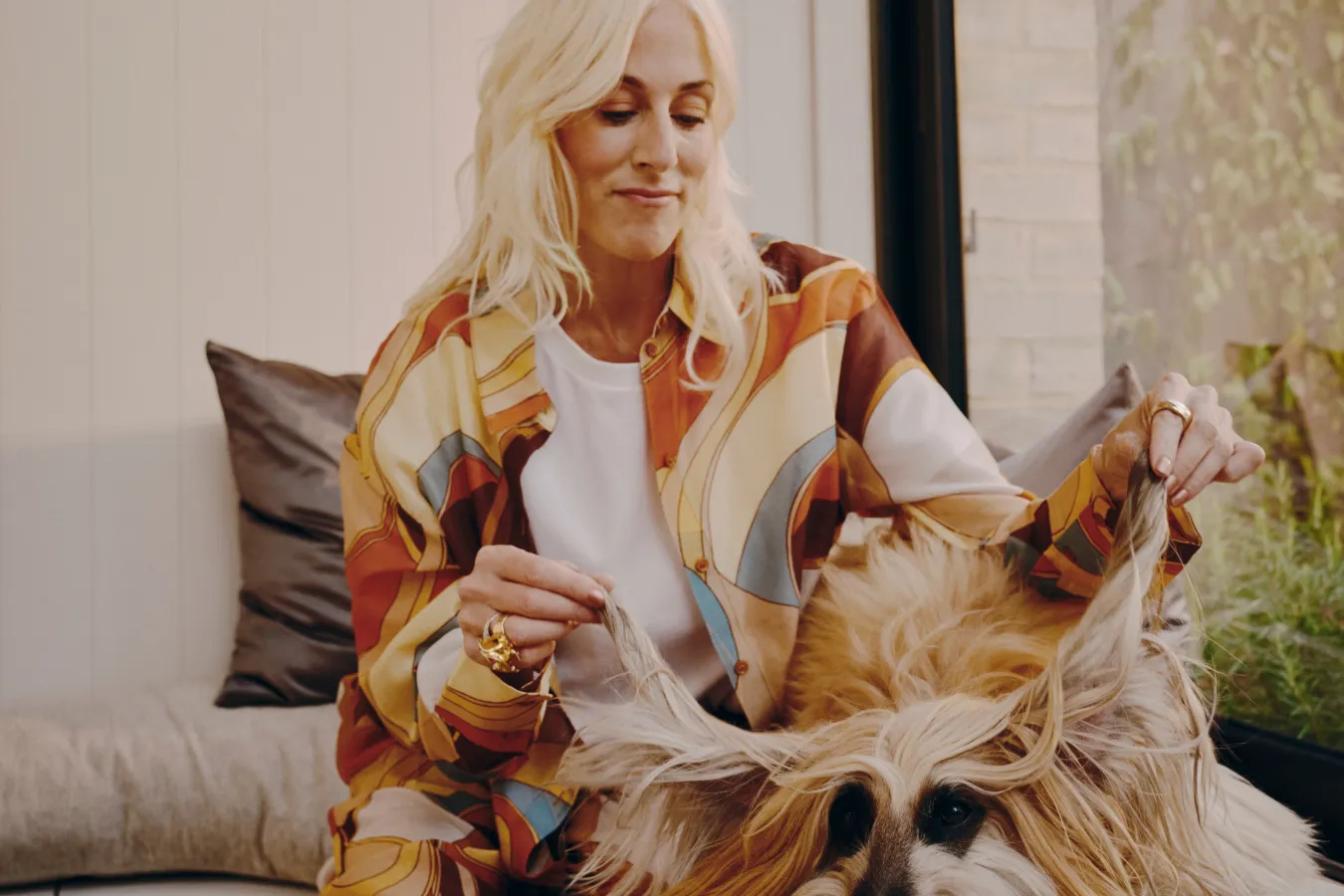
The wordless communication between dog and human is an amazing thing. Even so, things still get lost in translation. So if you’ve wondered why do dogs stare at you or why do dogs nibble your face, we’ve got some answers to help with understanding dog behaviour.
Dogs don’t need to ‘say’ anything to convey what they want or how they feel. The bond between a dog parent and their pet is so close that you can probably predict exactly what they need. You know the stare that means it’s dinner time, or the insistent paw that lets you know it’s time to go out.
Despite this, there might still be a few common dog behaviours that make total sense to your dog, but leave you wondering…
Why does my dog stare into my soul?
To understand this, you have to know a bit about dog history. They evolved from social predators, making body language and eye contact essential for coordination as a group. Then they met humans, and they started to coordinate with us instead.
Dogs are uniquely attuned to human faces and eyes. That love of staring is equal parts instinct and adaptation. It’s how dogs gather information, assess safety and communicate needs.
It’s also how they bond with you. Research shows that gazing into one another’s eyes can increase the bonding hormone oxytocin. So when your dog’s settling in for a good, long staring session, just remember: what they’re probably saying is, “you’re my safe person”. Smart dogs might also know that eye contact precedes food, walks or attention, so they could be giving you a nudge in that direction.
Why does my dog insist on digging and eating soil?
You prepare your dog the best meals that money – and devotion – can buy, but they can’t get enough of that delicious, delicious soil. Eating dirt can be a sign of nutrient deficiencies – so check with your vet if you’re worried. However, provided they’re getting a well-balanced diet, they do this for a simple reason: digging and eating dirt is fun.
Dogs are foragers and explorers, which means they love investigating. Wet soil is particularly rich in smells, microbes, decaying plant matter and animal scents – which makes it absolutely fascinating for your pet. Dogs encounter the world nose-first and mouth-second, and investigating the ground taps into those natural canine behaviours.
The process of digging is also self-rewarding, especially in places like your local park where there’s an abundance of new smells – and your dog is looking for an outlet for their excitement (or boredom).
For stubborn dirt-eaters, you can teach training cues – “leave it” is a classic – or redirect their attention to something else.
Why does my dog pretend to ‘bury’ things?
This is another example of your dog just doing dog stuff. Your pet’s wild ancestors would have ‘cached’ food as a way of saving it for later. If your dog likes to ‘hide’ a few bits of kibble in their blanket, you’ve probably already seen this behaviour.
If your dog can’t find a nice big hole to dig, they’ll improvise by scratching the floor, pushing over imaginary dirt, or covering the food with blankets, toys or air.
This performance might be entertaining to watch, but if you’re looking for a better outlet for your pet, try introducing a puzzle feeder or treat-dispensing toy. Hiding treats or kibble inside snuffle mats is another good option that activates your dog’s natural instincts.
Why does my dog prefer certain people?
If you’ve ever seen your dog gleefully greeting your neighbour, or relative, or even a total stranger in the street, you’ve probably asked yourself: “what makes them so special?" or even "does my dog like me?"
Dogs are experts at reading humans. Every time they meet someone, they’re subconsciously assessing body language, movement, voice, facial expressions and smell. Calm, predictable people that smell neutral or familiar are going to get an immediate green light. Loud, tense, unpredictable or fast-moving people might make your dog more uncertain.
There’s also the influence of breed. Spaniels, retrievers and beagles were all bred to be socially flexible – so they bond with most people – while German Shepherds, Malinois and Border Collies were bred to work independently, and don’t depend on human bonds as much.
Why does my dog spin around a hundred times before lying down?
If your dog was in the wilderness, they’d be doing this routine to flatten down the vegetation to stay warm, check for insects or snakes, and orient themselves depending on wind, temperature and scent.
While your pet is living a life of untold luxury, curling up at the end of your bed each night in warmth and safety, they still have the neural pathways that tell them to perform this ritual. Just like you probably fluff your pillows up before you climb into bed, your dog needs their night-time circling routine before sleep.
Why do dogs nibble me?
Some dogs love nothing more than a good nibble on their human’s face. It’s known as cobbing, or knitting, and it’s a sign of affection.
It connects back to the social grooming dogs do with each other, for example puppies they’re caring for or other dogs in their group. If you’re lucky enough to have multiple dogs in your household, you might notice them licking or nibbling each other to strengthen social bonds, and show affection. It’s like a dog-to-dog hug.
If we translate that nibbling from dog language to human language, they’re basically saying: “I love you, I’m caring for you, and you’re part of my gang.”
Why does my dog scootch their butt on the ground?
This is often because of problems with their anal glands. These are usually expressed when your dog passes stool, but if your dog has chronic soft or loose stools those glands might not get enough pressure. When they’re full they can become impacted, irritated and sometimes even infected.
The key to stopping this is taking care of your dog’s digestion; when that’s working well, the glands take care of themselves.
WellJoy’s dental sticks contain prebiotics and postbiotics, which means provides support for gut wellbeing – which leads to support for their digestion and poops – and hopefully less scootching.
Why does my dog roll in the grass (or much worse things)?
Few things are more alluring to a dog than a strong, complex smell. A scent that’s disgusting for their dog parent is irresistible to them – and that includes poop and dead animals. The stinkier the smell, the more valuable for a dog’s nose.
Rolling in scent is something a dog would do in the wild as a way of camouflage. It helps them blend into the environment and avoid detection by other animals. So when your dog decides that long-deceased bird or that unidentifiable brown goo is perfect, they’re just doing what comes naturally.
Some behaviorists believe this rolling is also a way of information-sharing – by wearing that scent, they’re bringing ‘news’ back to their social group.
Why does my dog kick up the grass after they go to the bathroom?
This also comes back to smell. Dogs have scent glands in their paw pads, so when they scratch or kick the ground they’re releasing scent, and also spreading the scent of their own wee or poo as far and wide as possible. This behavior is a form of communication with other animals, indicating territory boundaries and social status.
To translate, they’re telling the world: “I was here, and I’m confident about it.” This method of marking is crucial for dogs in navigating their environment and establishing their presence. It’s fascinating how such simple actions can convey complex messages in the animal kingdom.
Abnormal or red flag dog behaviours to watch out for
Of course, to accompany the above behaviours (which are mostly positive) there are a few dog behavioural watch-outs to keep in mind when assessing what your dog is trying to communicate through its behaviour:
- Refusing, or inability, to relieve themselves - in the worst case this may be a medical emergency, signalling blockages. If that is not the case, it may mean your dog is feeling unsure of their surroundings enough to put themselves in a vulnerable position and leaving them alone to find the right time and place to relieve themself could be the best approach. Being patient and understanding is key to ensuring your pet feels secure and comfortable in their environment.
- Sudden aggression or snapping - this usually means your dog is extremely uncomfortable (either physically or emotionally). If there isn't an underlying medical issue then this behaviour may resolve over time with rest and space (particularly if this is out of the ordinary or the dog's routine has changed). Consistent training and gentle reassurance can help mitigate these reactions.
- Excessive licking - the reason for this can be anything from medical issues (such as allergies or pain) to anxiety or boredom. See if your dog will engage in play or some other low-intensity activity to solve their boredom, but take it very easy and very slowly in case there is an injury or a form of anxiety. Let your dog begin the engagement and don't force them. Keeping a close watch on their behaviour can help identify triggers.
- Changes in normal movement behaviours - this could be severe restlessness to severe lethargy or rigidity which can be a symptom of a range of issues which may be best discussed with a vet. A proactive approach to observing these changes can facilitate early intervention.
- Vocal cues - barking or howling are often behaviours which show emotional concern. These sounds can indicate a range of feelings, from excitement to anxiety, or even a desire to communicate a need, such as hunger or discomfort. It's important for pet owners to pay attention to these vocalizations to better understand and respond to their pets' needs. In some cases, excessive vocalization might signal underlying health issues or stress, prompting a visit to the veterinarian. Observing the context and frequency of such sounds provide valuable insights into your pet's well-being and emotional state. Regular interaction can and observation can enhance.
If the above behaviours are sudden, persistent or don't subside even with behavioural training, a vet or behavioural therapist consultation may be required.
Summarising understanding dog behaviours
Dogs might not ‘talk’, but they’re communicating with us all the time, and getting to understand the ins and outs of their behaviour is a constant learning process.
If you want to make your dog happy, understanding the instincts that prompt their more unusual habits is way of becoming a better interpreter, and building a closer, more communicative, more joyful relationship with your pet.