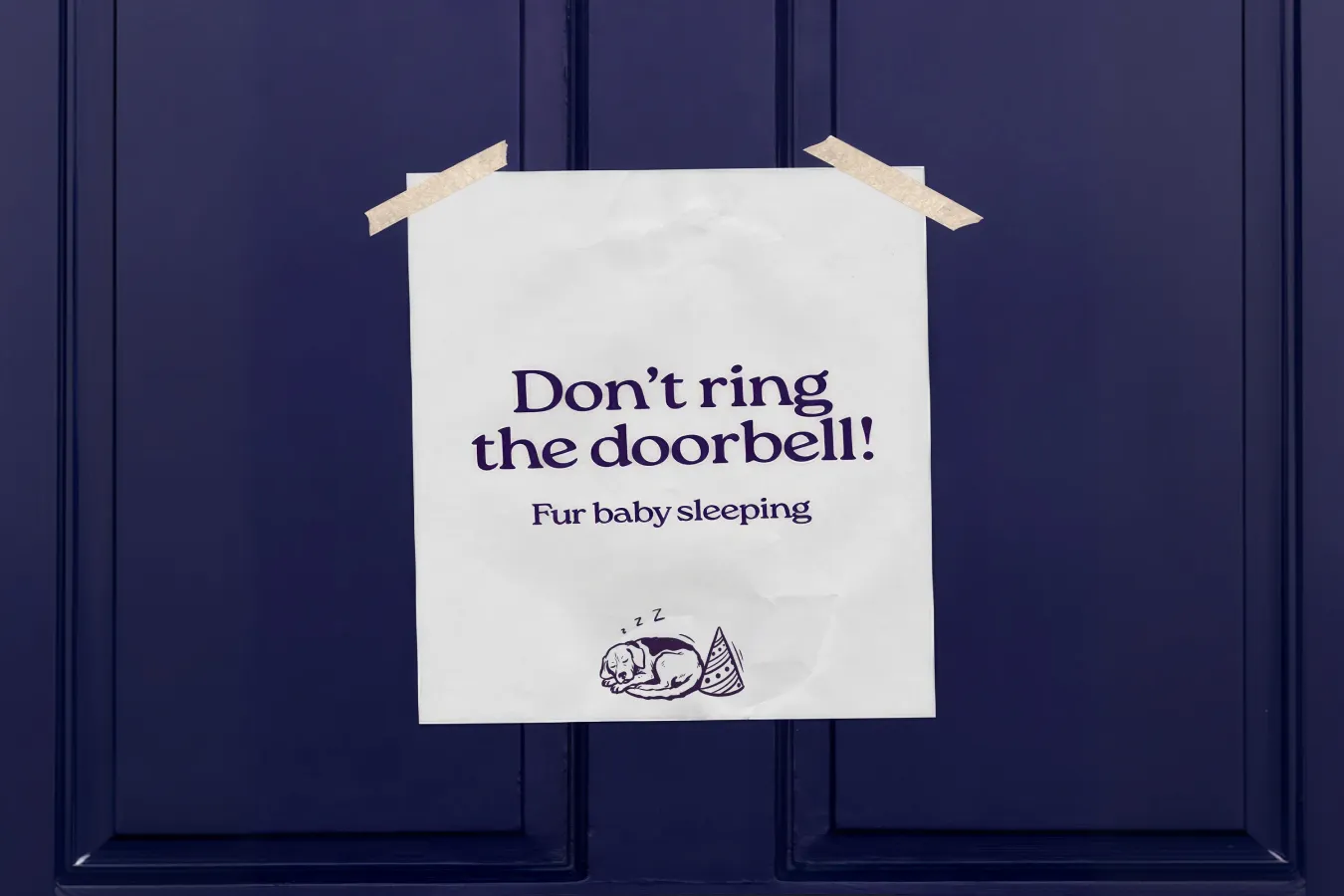
Party time is challenging for pets. They might seem outwardly calm, but new people, smells and noises can leave them feeling unsettled.
While you’re making drinks, serving snacks and keeping the conversation going, your pet is wondering what’s going on. Furniture isn’t in its usual place, there’s a world of new smells and new noises and every five minutes a different person arrives. From the pet parent point of view, party season is great. For your pet, it can feel overwhelming.
Scent is a major part of this. Dogs’ noses are far superior to humans. While we have 6 million olfactory receptors, dogs have 300 million. They live in a whole different universe of scent, and processing all of that requires a huge amount of energy.
Noise is another challenge. Loud music, guests laughing, the sounds of the house being rearranged, the doorbell going off… your pet is hyper aware of all of it. Dogs might become super alert, or retreat or hide.
All of these experiences can leave your pet feeling overloaded. So, we’re here for some party planning support with a checklist of things to do pre-, during, and post-event to make the whole thing a little easier on your dog(s), so you can concentrate on hosting.
The pre-party checklist
1. Establish some ground rules before guests arrive
All pets deserve to have a say in social interactions, and any good pet parent is ready to advocate for their pet, and ask guests to give them the space they need.
Some good basic rules of thumb: no leaning over pets, no hugging, no picking up and no unapproved treats. Encourage your guests to (politely!) ignore your pets at first, so they can make the decision about whether to socialize or not.
If you know you’ve got generous guests visiting, you might want to set up a designated treat jar with a set amount of treats that they can dispense.
Setting up boundaries in advance can prevent issues from arising, and help your pet feel safer, more in control and more able to relax.
2. Set up a lair
Safe spaces are key. Use baby gates to fence off areas, or set up closed, people-free rooms or quiet zones. Then, be prepared to be strict with guests about not disturbing pets that are resting. Excitable dogs (particularly young pups) might need to stay on the lead.
3. Keep things manageable
Knowing exactly how big a party to throw depends on your pet. Think about how confident and sociable your dog is, and how that might impact your plans. Smaller gatherings are generally better for pets, but this comes down to their individual temperament.
If you’ve just welcomed a new dog into your home, you might want to re-schedule your party plans. Vets recommend avoiding socializing for the first 2-3 weeks, and instead prioritizing bonding time, and getting them used to a safe, predictable routine.
On the big day
1. Stick to your normal routine
As much as possible, follow the usual schedule of feeding and walking – this is your pet’s emotional anchor, so try and avoid disrupting it. Dogs that are bundles of energy might benefit from a long walk or good play session to get some of the extra energy out before guests arrive.
2. Snacks at the ready
You can keep your pets busy by having some lick mats, frozen stuffed toys or food-dispensing toys on-hand, as well as a favourite chew toy if you’ve got a dog that’s a determined gnawer. And don’t forget to keep alcohol, chocolate, fatty foods, bones or skewers tucked safely out of the way of intrepid, scavenging dogs.
3. Be firm with guests
You can make pet-human introductions and encounters less stressful by reminding visitors to respect your pet’s body language and only interact if both sides are happy to.
Here’s some quick dog social rules as a guide:
- Don’t: lean over the dog or stare at them. Avoid being head-on, and give them the opportunity to approach you, and have a good sniff so they can gather information.
- Don’t: make sudden movements. Keep your hands low, and if you’re sharing a treat, toss it on the floor so the dog doesn’t have to interact to take it.
- Don’t: move towards a dog if they’re frozen, barking or trying to escape. This is a sign to stop and create distance.
Lastly, it's often best if guests don't bring their own pets along (especially if they are unfamiliar with each other) as this can add to the stress. If there's no avoiding this, ensure any visiting dogs meet in a neutral place outside the home to begin with, and watch for any signs of tension between them.
4. Keep an eye on your pet’s behavioural signals
Dogs will display subtle signs that they’re not entirely comfortable – such as yawning, flat ears, being very still, grooming excessively, hiding or refusing food. And for our readers that are a joyful multi-pet household, it’s good to remember that in stressful situations like parties, pets can get irritable with each other too.
If you’re noticing these signs, putting your pet in another room is a relief rather than a punishment. Some time to themselves along with comfy bedding, water, a litterbox and maybe some white noise or calming music can give them some much-needed downtime.
The recovery
It’s the day after your party, there’s cups and plates everywhere and all you want to do is lie on the sofa and nap. Your pet might feel the same. Elevated stress hormones from the big day can linger for up to 72 hours, which means they need time to recalibrate.
Post-party, the kindest thing you can do is let your pet rest. That means plenty of quiet, no big walks, and every opportunity for them to sleep so their brains can process the experience. Keep up your normal routine, and don’t pressure your pets to interact with you – you’re there as a nearby, familiar and calming presence.
“Trust returns fastest when pets feel respected, not coaxed. So let them come to you when they are ready, sit nearby without engaging and offer a calm presence; don't pressure them to interact with you.”
Kathryn Miller DVM, CVFT, CPFFCP, CVNAN, PCQI
Understanding why big social events can be stressful for your pets is the first step to knowing how to adapt them accordingly. With a few extra adjustments, some advice to your guests, and an awareness of what behaviour to watch out for, you can make party time joyful for humans and animals alike.