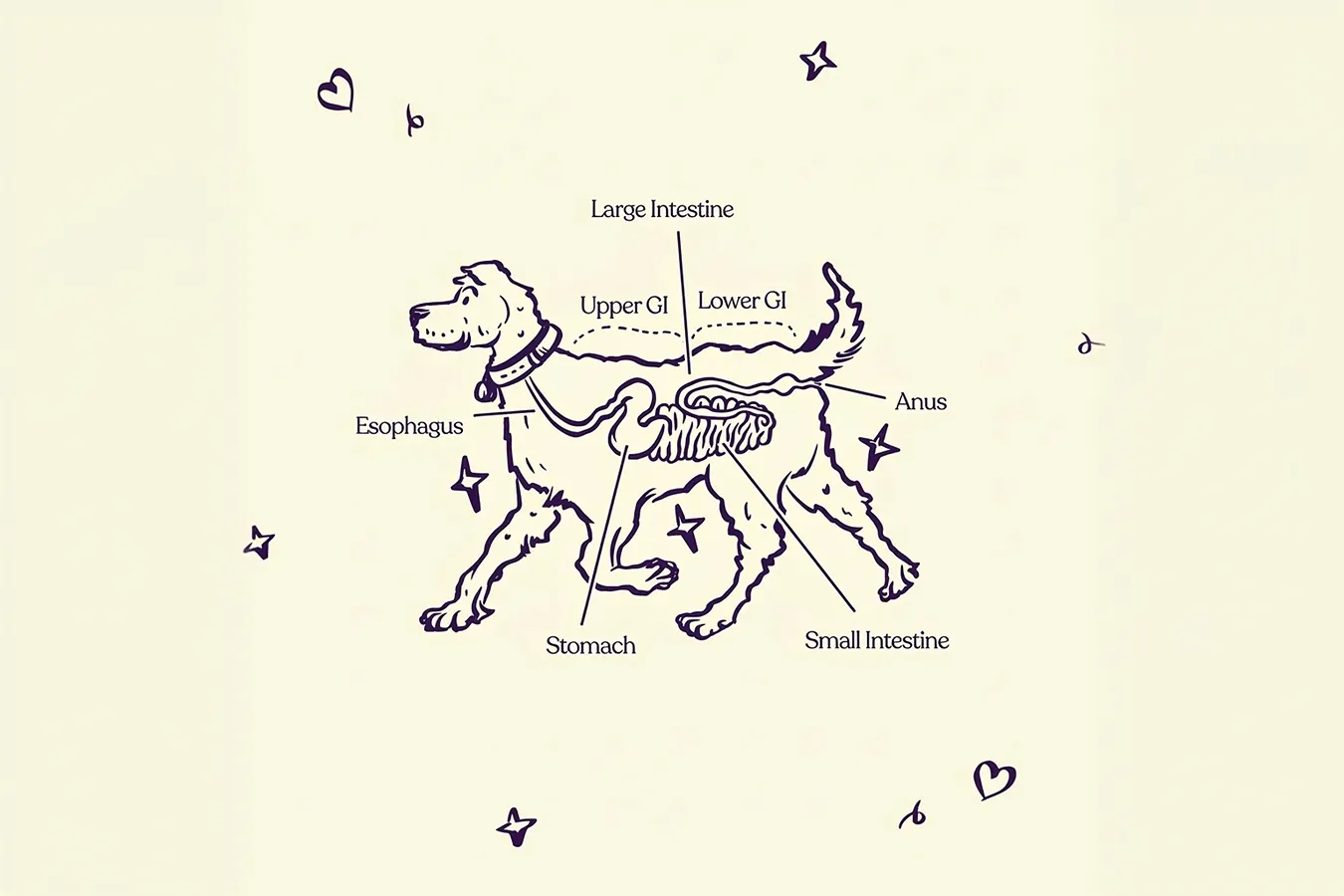
There’s a world of ways you can tell that your dog’s gut microbiome needs some extra love – from the obvious, like stinky breath, to more subtle, behavioural signs. Here’s what to watch out for.
Your dog’s gut is a truly wonderful thing. It’s a part of the body that doesn’t get much love – and that’s understandable when it’s competing with springy whiskers, waggy tails, and paws that seem made for kisses. However, a healthy gut is crucial for overall well-being. It’s responsible for digestion, nutrient absorption, and even plays a role in immune function. By maintaining a balanced diet rich in fibre, prebiotics, and postbiotics, you can support your pet’s gut health, ensuring they lead a happy and energetic life.
Just like humans, pets can benefit from a diet that includes a variety of foods to promote diverse gut flora. Regular check-ups with your veterinarian can also help monitor and maintain optimal gut health. So, the next time your pet jumps with joy or curls up beside you, remember that a healthy gut contributes to these delightful moments.
But while you’re admiring your pet’s glossy coat and perky ears, the gut is working away, producing essential nutrients, communicating with organs across the body, and supporting the immune system.
If the microbiome that sits inside the gut (think of it like an ecosystem) is unbalanced, it can affect your dog’s wellbeing in a multitude of ways. Gut health can be disrupted by a lot of things, including some of your pet’s most disgusting habits – like puddle-drinking and soil-eating. Dirty food dishes, household stress, a lack of exercise and highly processed diets can also all play their part.
So if you’re thinking about introducing a gut health supplement into your pet’s routine, here’s some signs you might want to keep an eye on:
Teeth
Pet parents can’t expect their dog's breath to be minty fresh, but if your pet has unending bad breath, that can be a sign of microbiome imbalance. That’s because when there’s not enough good bacteria, the harmful bacteria overgrows, leading to stinky breath and gum disease.
Skin & Coat
Is your dog’s coat looking a little less glossy than normal? Are they leaving clumps of fur around the house? Have you noticed recurrent hot spots or irritated skin? Skin and coat quality can be an indicator of microbiome health – and that’s because the gut’s microbial community influences inflammation, nutrient absorption and immune signals, all of which play a role in maintaining healthy skin and a resilient coat.
When the microbial community in the gut becomes imbalanced, it can influence inflammation, nutrient absorption, and immune signalling, all of which play a role in maintaining healthy skin and a resilient coat.
Digestion
Keeping an eye on the bathroom situation is just what a good pet parent does. If you’re noticing changes in stool consistency, whether too soft or too firm, that could be connected to poor gut health. Vomiting or burping can also be signs to watch out for. Additionally, pay attention to any changes in your pet's appetite or energy levels. A sudden decrease in food intake or a noticeable lethargy might indicate digestive issues. Regularly monitoring their water intake is also crucial, as dehydration can exacerbate gut problems. Ensuring that your pet has a balanced diet with adequate fibre can help maintain their digestive health. Don't forget to consult with a veterinarian if you observe persistent symptoms, as early intervention can prevent more serious health concerns. Remember, a happy and healthy gut contributes significantly to your pet's overall well-being.
Energy levels
This is a more subtle one, but if your dog isn’t tearing round the park like they usually do, or swapping playtime for naptime, that could suggest their microbiome needs support. Your pet’s gut is pivotal in nutrient absorption, and if that’s suboptimal – or if inflammation is brewing – energy levels can drop.
Mental state
Is your pet less interested in the usual things they love? More easily startled? Finding it hard to relax? People often think of the microbiome as connected to digestion, but there’s a very real gut-brain axis, because the microbiome influences mood-regulating brain chemicals. This complex relationship means that maintaining a healthy gut can have a profound impact on your dog's mental well-being. Incorporating probiotics or prebiotics into their diet may help balance the microbiome, potentially improving their mood and behaviour. Regular exercise and a balanced diet are also crucial for overall health. Observing changes in your pet's behaviour might be an indicator of underlying health issues, making it important to consult with a veterinarian.
Behaviour
We just mentioned the all-important gut-brain axis, and that can affect neurotransmitters responsible for calmness, motivation, pleasure, relaxation, attention and memory. Gut imbalance and stress can also amplify one another. So if you’re seeing more restlessness, reactivity, vocalizing or any other sudden change in behaviour, you might want to think about introducing extra gut support.
Getting balance back: how to improve dog gut health
Worrying about your pet’s physical or mental health is tough, and we always recommend a conversation with your vet if you’re feeling concerned. They can advise you on next steps, and recommend supplements where appropriate if your dog isn't getting what they need from their normal intake.