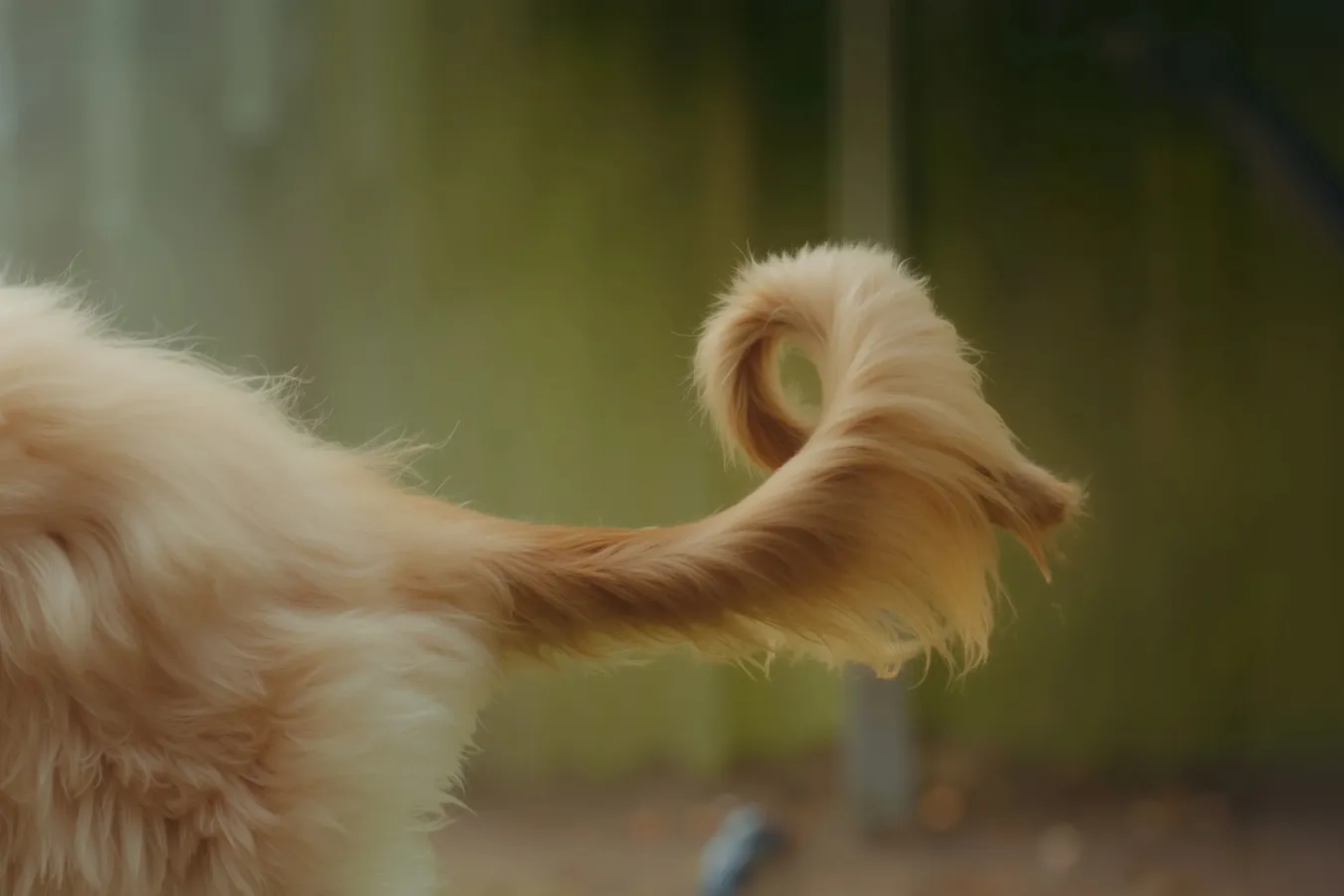
“I usually know Bear is happy to see another dog because of his low, slow, relaxed tail wag – totally different to when he sees a squirrel and it puffs up, stiff as a broom.”
Waggy tail = happy dog, right? The truth’s a bit more complicated.
A dog’s tail conveys many moods, acting like a barometer for their emotions. Reading that barometer can tell you how your dog is feeling, and what they might be trying to tell you (or someone else).
At its most basic level, a tail wag simply means: “I’m emotionally switched on.” That tail covers a huge range of feelings from joy and excitement to frustration or nervousness. Taking into account height, speed, stiffness, direction – and even how much of the body is involved – can all tell you something.
Let’s talk tails
If you asked a thousand dog parents what they love best about their dog, you’d probably get a thousand different answers. It might be the soulful eyes, the neat little paw pads, the fluffy bellies, the silky ears…. But we’d hazard a guess that the tail would come up a lot.
Tails are often the first things humans look at, and it’s a primary way that people understand what their pets are trying to say.
Tails speak a language of their own: greeting another dog, seeing a small animal in the yard, meeting new people, playing with kids, feeling unsure at the vet clinic. That language happens as part of an array of other signs including ear position, facial tension, posture and movement.
It’s hugely complex as well, with some studies showing dogs display right-biased tail-wags in positive situations and left-biased wags in threatening or uncertain experiences.
Understanding what the tail is saying, alongside all the other body language, keeps people and other pets safe. Getting to know how the tail works can also help you identify any changes from your pet’s ‘signature’ wag, which might hint at pain or other underlying problems.
The tail, translated
We’ve put together a compendium of tail talk, with some thoughts around when you’re likely to see it, what it might look like, and what it actually means:
Frozen tail
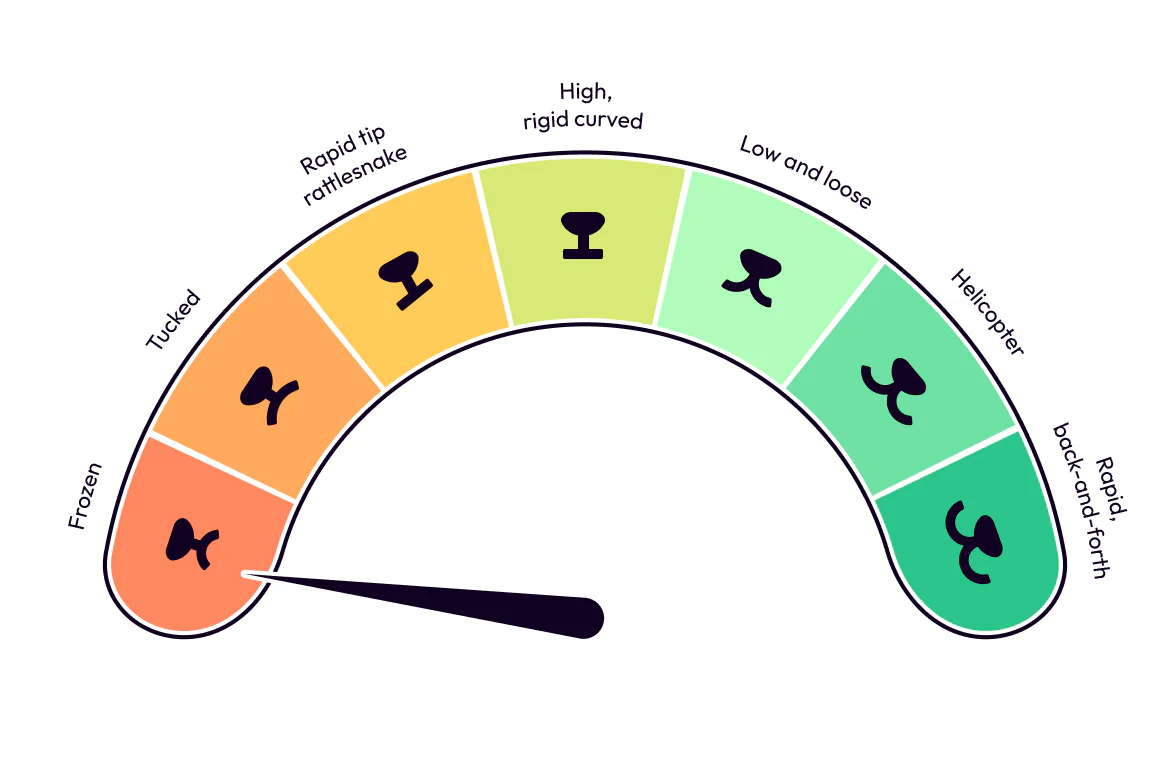
- Often seen during: Moments of high tension, fear or focus, or resource guarding and difficult encounters.
- Watch for: A rigid, motionless tail. Absolutely no wag.
- What it looks like: “I’m ready to play!”
- What it actually means: “I’m about to take aggressive action.”
- What you need to know: It may seem counterintuitive, but sometimes a lack of movement is more significant than a lot of movement. This very static tail can precede aggressive escalation, so it’s one to be aware of – particularly if your dog has a strong prey drive.
A tail that’s tucked under
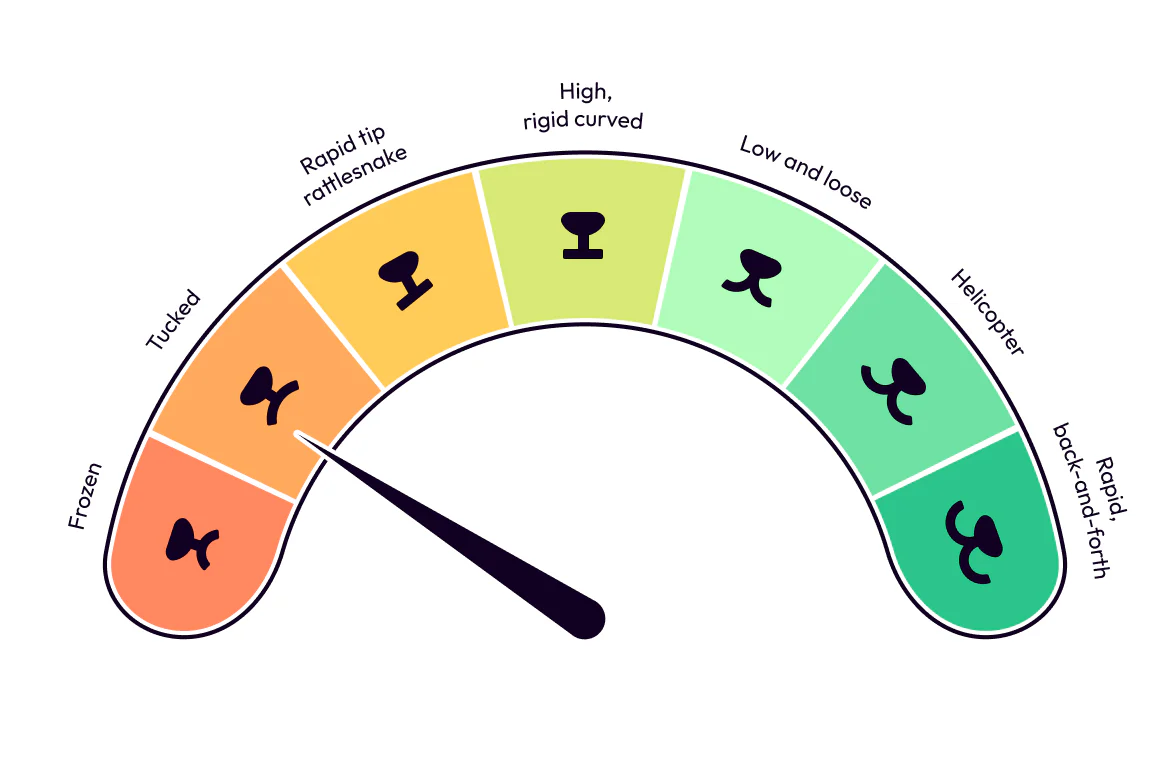
- Often seen during: Moments when a dog is afraid, anxious, in pain, distressed, overwhelmed, or trying to avoid conflicts.
- Watch for: The tail tucked between a dog’s legs and curving under their belly
- What it looks like: “I’m scared.”
- What it actually means: “I’m scared, stressed, or not okay with what’s happening.”
- What you need to know: This is a very clear signal from your dog, and a sign to change the situation or seek help. Slow things down, give them space, use a calm voice and don’t force interaction on them. If a dog has a persistently tucked tail, that might be a sign of pain or discomfort, and is worth a trip to the vet.
The rapid rattlesnake wag
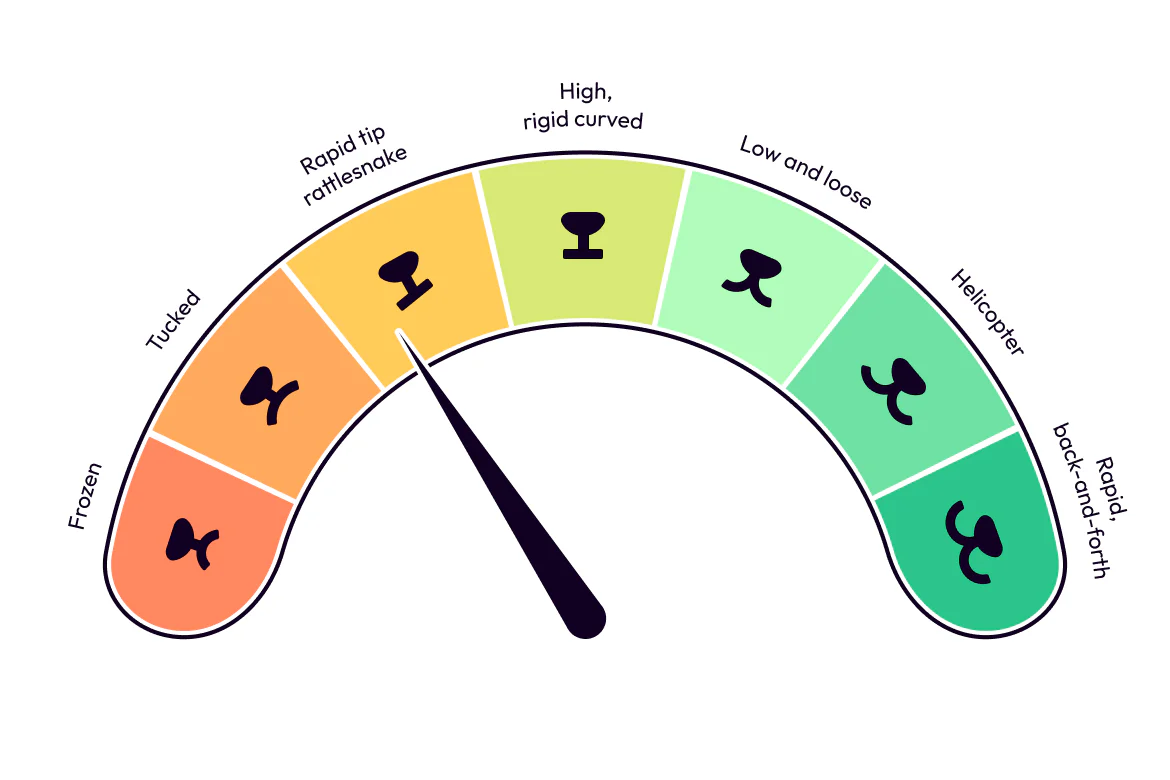
- Often seen during: Tense greetings, resource guarding, moments when dogs are feeling challenged or ‘done’ with rough play.
- Watch for: The tail held high, and only the tip vibrating quickly – accompanied by a stiff body.
- What it looks like: “She’s wagging, it’s fine to pet her.”
- What it actually means: “I’m worked up, and I’m deciding what to do next.”
- What you need to know: This tail signals high arousal that can easily tip toward conflict. It can also precede growling or biting if pushed. It’s important to help younger family members understand that a wagging tail doesn’t always mean ‘friend’, particularly as studies have shown children can overestimate positive emotion.
The high, curved, rigid tail
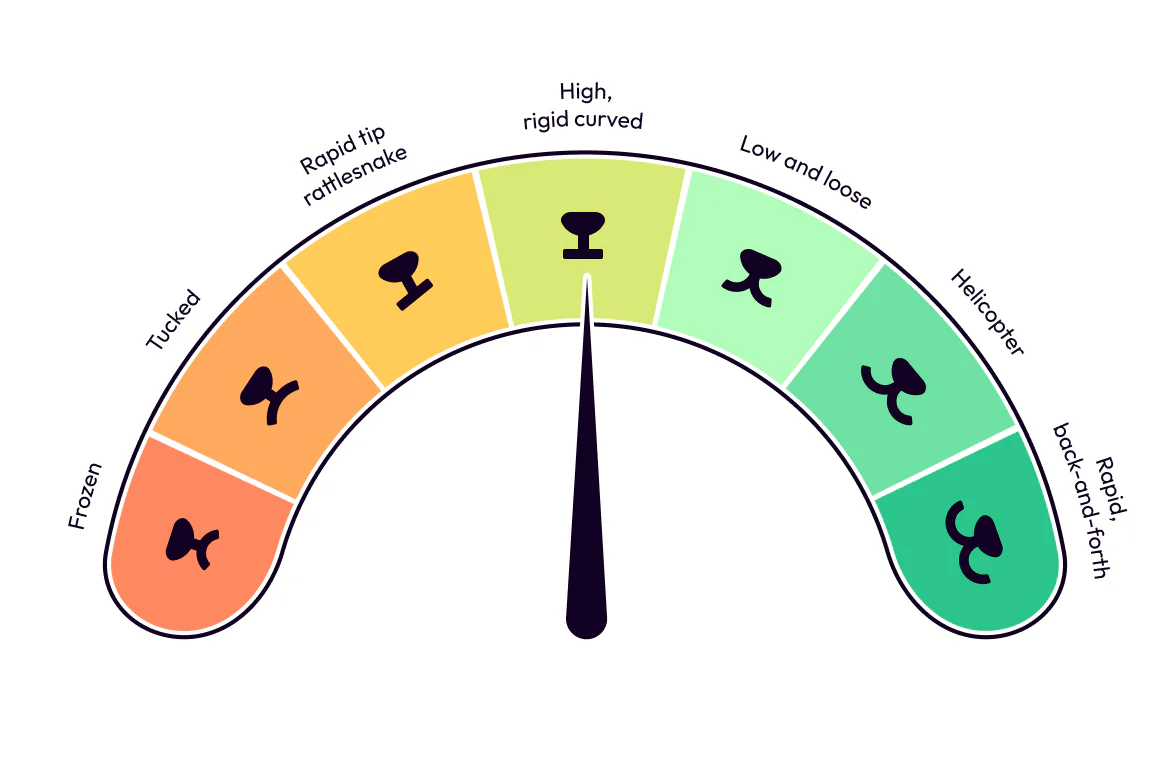
- Often seen during: the moment your dog spots a small animal like a squirrel, cat or bird. It can happen when your dog is on guard or displaying alert behaviour, or when they’re feeling ‘big’.
- Watch for: forward-leaning posture, closed mouth, still body, narrowed eyes.
- What it looks like: “I’m excited to play!”
- What it actually means: “I’m on high alert; I might chase or react.”
- What you need to know: This kind of tail usually suggests a state of tension, intense arousal or prey drive rather than social friendliness, which means a dog isn’t available for petting or introductions. Play with another dog can turn into dominance or aggression, so Dog parents might want to think about quietly calling their pet away or using a leash.
The low, loose wag
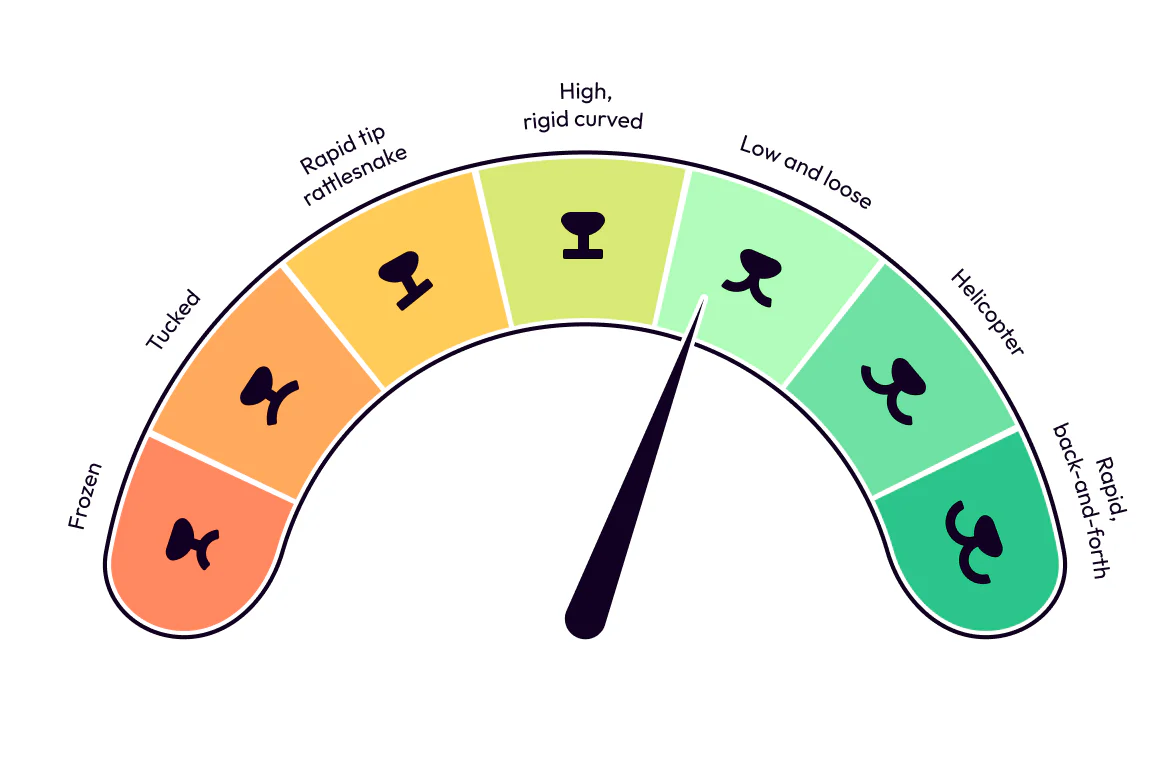
- Often seen during: neutral dog-to-dog greetings and polite hellos at the park.
- Watch for: relaxed muscles, wiggly hips, soft eyes and mouth.
- What it looks like: “I’m shy, but friendly.”
- What it actually means: “I’m friendly, but I’m not totally sure yet.”
- What you need to know: These signs usually suggest a dog is safe and social, however keep an eye on the contextual body language: if they have a low body and pinned ears, that could suggest appeasement (“please be nice”), which means they’re feeling uncertain.
Helicopter tail
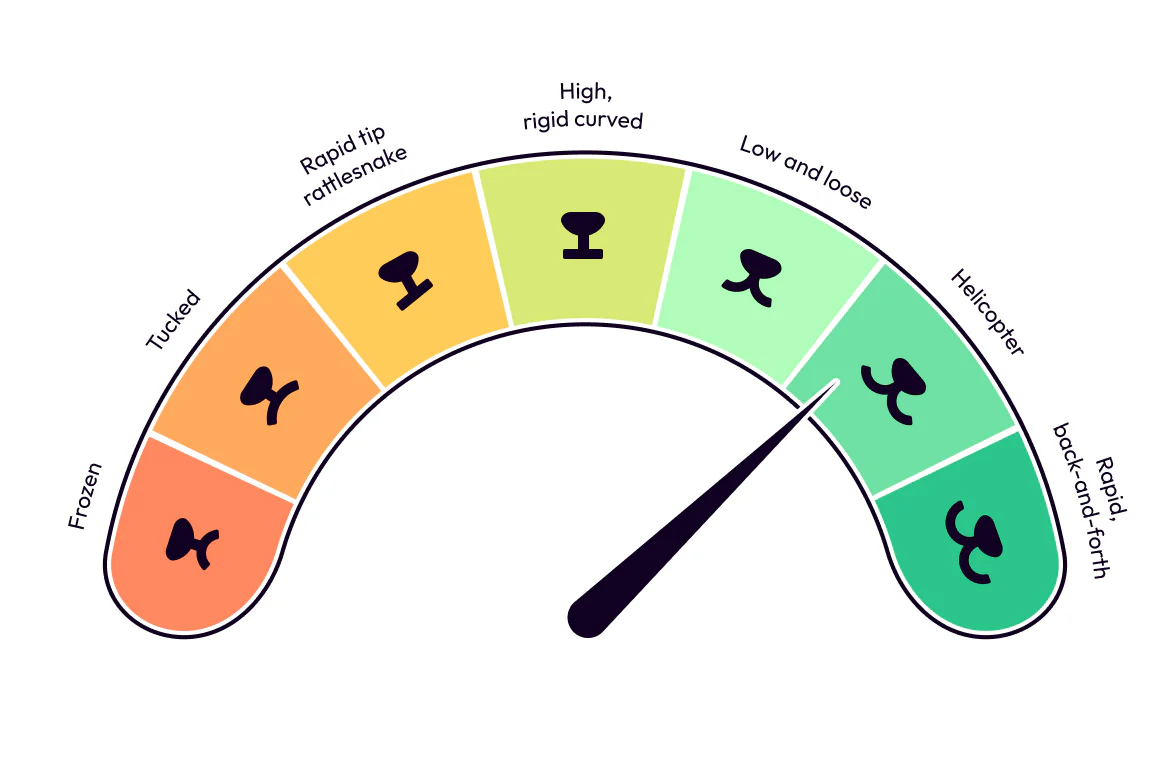
- Often seen during: Social greetings with humans or dogs they’re very attached to.
- Watch for: The tail doing full, excited circles.
- What it looks like: “I’m happy to see you!”
- What it actually means: “I’m happy to see you!”
- What you need to know: Perhaps the most excited tail of them all, this one conveys overwhelming joy. It’s a sign that the dog is highly bonded to the human or dog they’re greeting, and it signals extreme positive emotion.
Rapid, excited, back-and-forth wagging
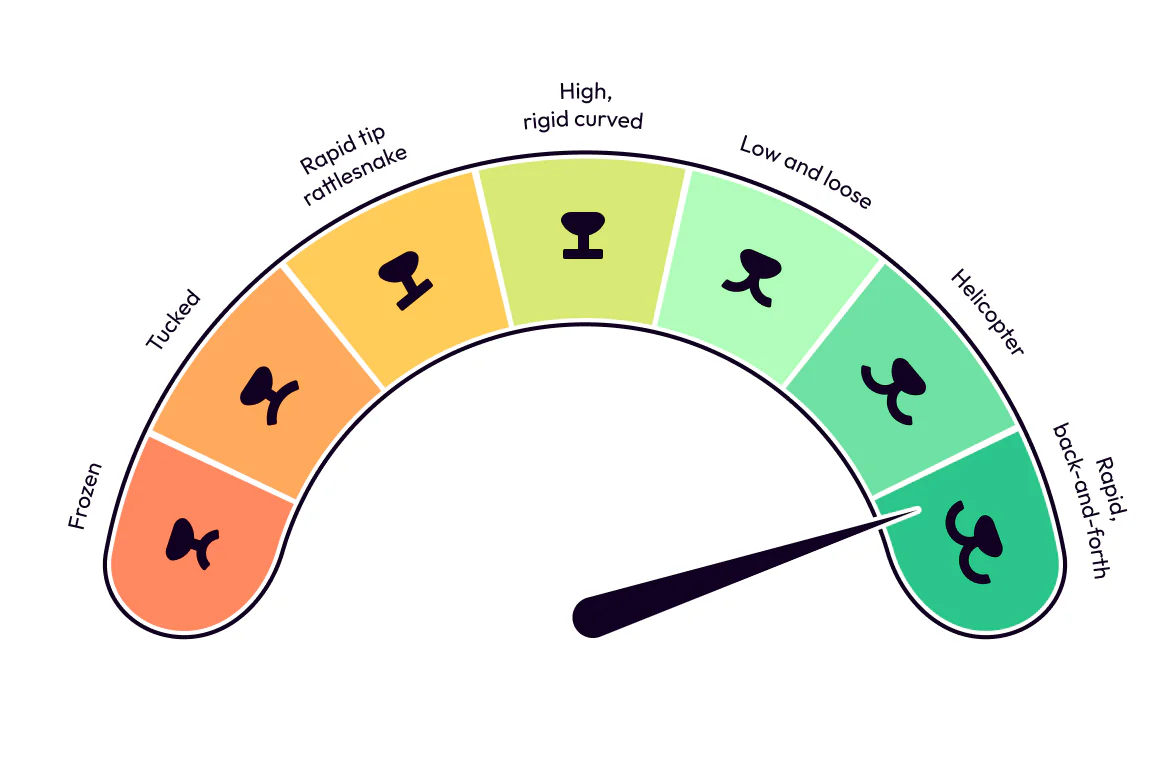
- Often seen during: Moments of intense joy or excitement, or other times your pet is experiencing big feelings.
- Watch for: A frantic, fast wag.
- What it looks like: “He’s happy to see us!”
- What it actually means: “I’m thrilled, let’s interact!”
- What you need to know: This is usually the green light for love, kisses, joyful reunions… but context is still important. If this very excitable tail is happening at the same time as tense body language, jumping and mouthing, that could suggest overarousal, and your dog might need a calmer approach.
Beyond the tail wag
The tail says a lot about how your dog is feeling, and by checking in on their ears, eyes, mouth, posture and movement, you can get a full-body read on what those emotions are.
It’s not just emotional, either, keeping an eye on the tail and noticing any changes from normal posture and wag style can help you identify underlying health conditions – such as spinal, hip pain, skin infections or anal sac disease.
Reading tail language isn’t just a way to respect your dog’s emotions and space, it’s a good indicator of their underlying health, and an important signal to report to your vet for early diagnosis and care.
Happy tail translating, dog parents!